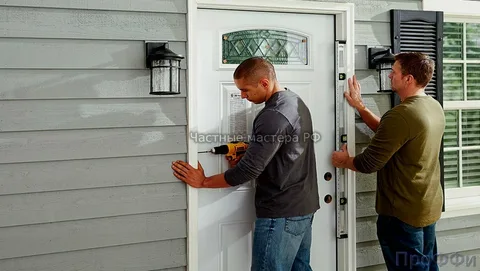
A new door improves your home’s entryway appearance and function. The installation also involves the frame, threshold, hardware, and surrounding surfaces. Door installation starts with assessing the existing opening before installing the new unit. Here is how the installation process typically moves from assessment to completion:
Assess the Door Opening
The existing opening provides the starting point for a new door installation. The team checks the frame for damage and rot before work begins. An opening that sits out of square requires additional preparation before installation. Pre-hung entry doors fit existing frames when the opening remains suitable for replacement. Large amounts of movement within the opening may require rebuilding before the door is installed. Frame condition also affects how the new unit sits within the opening.
The rough opening receives attention before the replacement unit arrives. Measurements help determine whether the selected door fits the available space, and related frame repairs address damaged areas surrounding the installation point. This makes sure the door fits properly.
Choose the Door Style
Entry doors come in a variety of materials, including steel, fiberglass, and solid wood, each offering a distinct look and feel. Energy-efficient doors can also help improve your home’s insulation and reduce heat loss. The style you choose should fit with the overall theme of your home.
The existing opening also influences which replacement door fits the project. A suitable selection works with the available frame and surrounding structure. Material selection also establishes the door’s appearance before installation begins.
Prepare the Door Frame
Frame preparation creates the conditions needed to position the new door correctly. Damaged sections receive repairs before the replacement unit is positioned. Shimming helps place the frame accurately within the opening.
The following preparation steps support the installation:
- Repair damaged sections of the existing frame.
- Shim the frame as needed to adjust positioning.
- Prepare the rough opening for the replacement unit.
- Fit the threshold to the doorway.
- Install the sill pan where required.
Preparation also addresses areas directly connected to the doorway. Jambs, casing, and trim receive carpentry work when those components require adjustment. Nearby drywall, siding, or sheathing may also require repair around the opening.
Install the Door Unit
To make sure the selected door unit fits the prepared opening, the installer positions the frame and checks for proper alignment. A pre-hung entry door arrives with the door already attached to its frame, which simplifies placement within the prepared opening. The installer checks the unit’s position before securing it, since uneven placement can affect how the door opens and closes.
Finish Hardware and Seals
Once the door is installed, the team completes all functional parts with hardware. Install handles, hinges, locks, and other parts based on the door configuration. Sealing work is done at the gap around the door and the gap around the threshold. Some tasks that can be completed after work:
- Mounting handles, hinges, or other door fixtures.
- Fitting smart locks or deadbolts.
- Installing weatherstripping around the door.
- Adding door sweeps to the bottom edge.
- Fine-tuning the threshold and adjacent trim.
Learn More About Door Installation
A newly installed door involves more than fitting a replacement unit into the existing opening. The frame, hardware, sealing, and other trim work are all part of the final installation. Walking through the finished door gives you a chance to check out the whole installation and see where any changes need to be made. For professional door installation, schedule an assessment of your existing opening and replacement needs.
