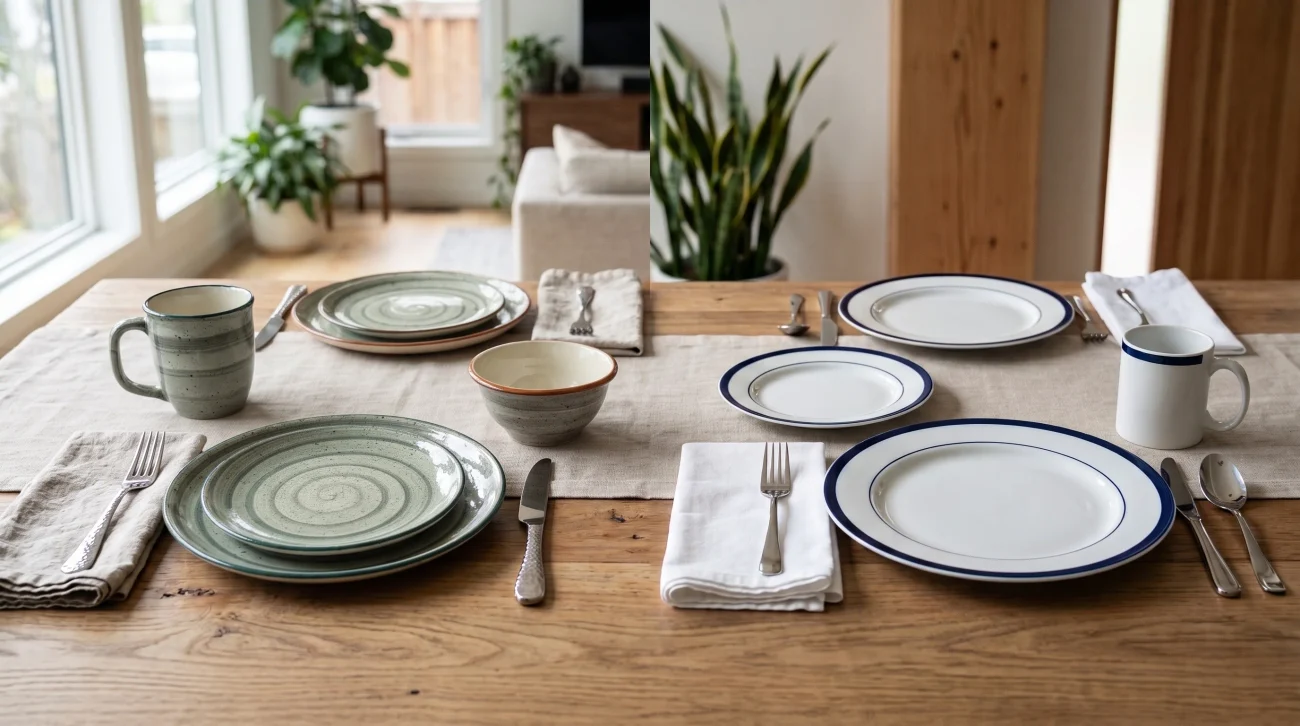
Pick up a mug and your fingers notice things before you take a sip. The handle leaves a certain amount of room for your knuckles. The rim feels thin or rounded against your lips. Your thumb finds a shallow groove near the top. In handmade pottery from www.blackoakart.com, these small details reflect decisions made while someone worked the clay.
Factory production follows a different rhythm, with repeatable shapes and consistent finishes across large batches. Handmade ceramics leave more room for individual adjustments. That difference becomes especially noticeable in a mug you reach for every morning.
Your hand notices the shape
A mug’s appearance tells only part of the story. Its weight, balance, and handle determine how comfortable it feels once filled with coffee.
When making a mug by hand, a potter shapes the body and gives attention to how the handle joins it. A slightly wider handle changes the grip. A rounded edge feels different against a finger than a narrow, angular one. Even two mugs with similar outlines sometimes sit differently in the hand.
Handmade does not automatically mean comfortable. An awkward handle remains awkward regardless of how it was formed. Good pottery craftsmanship shows in the relationship between the parts: a steady base, a comfortable rim, and a handle that suits the weight of the filled vessel.
Glaze gives the surface its character
Look closely at a glazed handmade mug. Color sometimes gathers in recessed areas, thins along raised edges, or breaks around texture in the clay. These changes give the surface depth without requiring a printed pattern.
A potter chooses the glaze and controls its application, but firing also affects the result. Differences in glaze thickness and conditions inside the kiln influence the finished surface. Two pieces glazed together often share a color family while showing small variations.
Those differences explain some of the appeal of custom ceramic mugs. A simple carved line or impressed design interacts with the glaze, becoming part of the surface you see and touch.
Fun fact: The circular ridges inside some wheel-thrown mugs record the shaping process. They form as the clay rotates beneath the potter’s fingers. Some makers smooth them away; others leave them visible beneath the glaze.
Stoneware describes the clay, not the production method
Stoneware appears frequently in handmade drinkware, but factories produce stoneware too. The word describes a category of fired ceramic rather than proof that someone made a piece by hand.
The material alone also tells you little about how a mug feels. A thick stoneware mug feels substantial, while a more finely shaped one feels lighter. Wall thickness and handle proportions deserve as much attention as the material listed in the description.
Care instructions matter here. A handmade mug should come with clear information about its suitability for food contact and everyday cleaning. A beautiful finish does not establish dishwasher or microwave suitability.
Custom details work better when they belong to the mug
Personalization often begins with a name, date, or logo. The more interesting question is where that detail belongs.
On handmade ceramics, lettering might be stamped into damp clay, carved into the surface, or applied as decoration. Placement changes the result. A small mark near the base creates a quiet detail, while a larger design becomes the mug’s main feature.
For logo mugs and branded drinkware, the design needs to remain readable on a curved surface. Fine lettering that looks crisp on paper sometimes loses clarity at mug size. Reviewing a sample reveals how the artwork, glaze, and shape work together before a larger order goes ahead.
A gift that becomes part of the cupboard
Personalized mugs have a practical advantage as gifts: they enter an ordinary routine. Someone washes the mug, chooses a shelf for it, and gradually develops a preference for its particular handle or weight.
For wholesale ceramic mugs, that everyday usefulness deserves attention alongside the decoration. Buyers need agreed dimensions, clear expectations about acceptable variation, and a sample that represents the finished batch.
A thoughtful inscription gives someone a reason to open the box. A comfortable handle and a pleasant rim give them a reason to keep reaching into the cupboard for the same mug.
