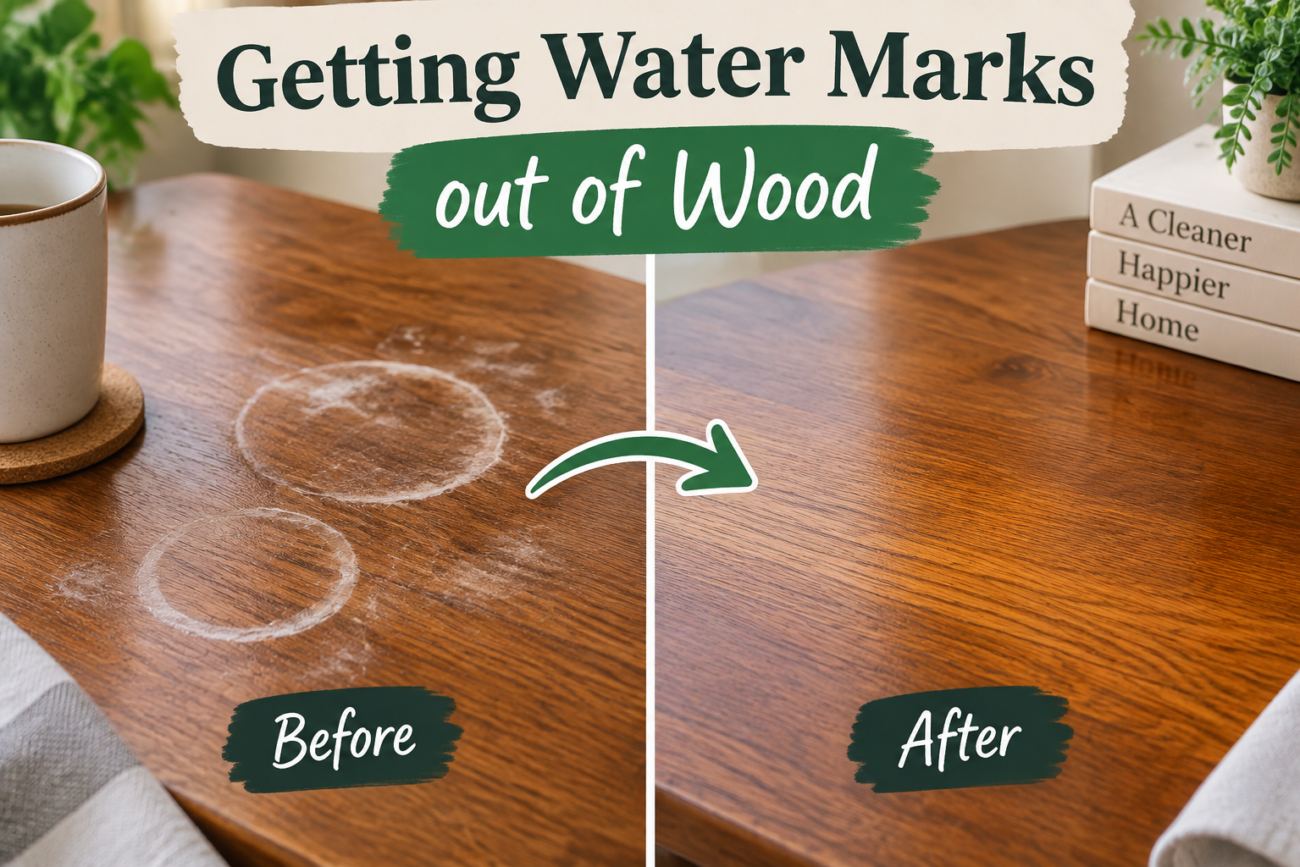
Water marks on wood furniture are a common problem. A cold glass left on a table, a wet plant pot, or a small spill can leave behind white rings, cloudy patches, or darker stains. The good news is that many water marks affect only the finish, not the wood itself, so you can often improve them with careful cleaning.
The best way to remove a water mark depends on the type of stain. White or cloudy marks usually indicate moisture trapped in the finish, while dark stains may mean water has reached deeper into the wood. Understanding the difference helps you choose a safer treatment.
Identify the Type of Water Mark First
Before trying any removal method, check the stain’s appearance.
White or Cloudy Water Rings
White rings often come from moisture trapped in the protective finish on top of the wood. These marks are usually easier to treat because the wood underneath may still be unaffected.
Common causes include:
- Cold drink glasses placed directly on furniture
- Wet cups or bottles
- Damp decorative items
- Condensation from plants or containers
Dark Water Stains
Dark brown or black marks usually indicate that moisture has penetrated beyond the finish and affected the wood fibers. These stains can be more difficult to remove and may require deeper restoration methods, such as sanding or refinishing.
Simple Methods for Removing Water Marks From Wood
1. Try Gentle Heat for White Rings
A common method for white water marks is using gentle heat to help release trapped moisture from the finish.
Steps:
- Place a clean cloth over the affected area.
- Briefly press a warm iron over the cloth, avoiding direct contact with the wood surface.
- Check the mark frequently and stop if the finish changes.
Some furniture-care guidance recommends using heat and moisture to treat water spots, but excessive heat can damage finishes, so always test cautiously.
2. Use a Hair Dryer
A hair dryer can be a less aggressive option for some fresh white rings.
How to try it:
- Set the dryer to medium or warm.
- Hold it several inches away from the surface.
- Move it continuously instead of keeping heat in one spot.
- Check the area after a few minutes.
Avoid overheating the finish, as too much heat may create additional damage.
3. Clean the Surface Carefully
Sometimes a mark is partly caused by residue on the finish rather than deep moisture.
Use this approach:
- Mix a small amount of mild dish soap with water.
- Apply only a small amount to a soft cloth.
- Wipe gently.
- Dry the surface immediately.
When cleaning wood, avoid soaking the surface because excess moisture can create more problems. Experts recommend using water sparingly and drying wood surfaces quickly after cleaning.
4. Try Furniture Polish or Wax After Cleaning
After removing a surface mark, a suitable furniture polish or wax may help restore the finish’s appearance. Always follow the product instructions and test it on a hidden area first.
What to Do If the Water Mark Does Not Disappear
If a stain remains after gentle methods, avoid aggressive rubbing. Scrubbing too hard can remove the finish and make the damaged area more noticeable.
For deeper stains:
- Consider professional furniture restoration.
- Use refinishing techniques only when necessary.
- Be especially careful with antique or valuable furniture because preserving the original finish is often preferred over major changes.
Mistakes to Avoid When Removing Water Marks
Some cleaning attempts can worsen wood damage. Avoid:
- Using too much water
- Applying strong chemicals without testing
- Scrubbing aggressively
- Applying heat for too long
- Skipping a hidden-area test before using a new product
Wood finishes vary, so what works on one table may damage another. Testing first is always safer.
How to Prevent Future Water Marks on Wood
Prevention is easier than repair. Simple habits can protect wood furniture:
- Use coasters under drinks.
- Place mats under hot or wet items.
- Wipe spills immediately.
- Use protective pads under plant pots.
- Keep wooden surfaces dry.
Regular care helps maintain the protective finish and reduces the chance of moisture damage.
Final Thoughts
Removing water marks from wood starts with identifying the type of stain. White rings caused by moisture trapped in the finish are often easier to improve with gentle methods, while dark stains may require more advanced restoration. The safest approach is to start with mild solutions, test carefully, and avoid damaging the original finish.
With proper care and quick action, many wood surfaces can maintain their natural beauty for years.
